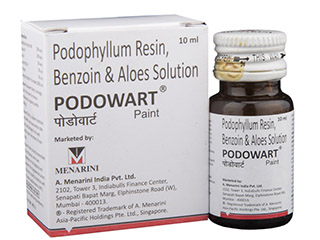
Podowart (Podophyllum resin) — Patient Information Guide (UK)
Podowart contains podophyllum resin, a plant-derived medicine used to treat certain types of warts. This guide explains how it works, how to use it safely, what to expect, and key precautions—written for people in the United Kingdom.
| Product | Active ingredient | Common use | Typical form |
|---|---|---|---|
| Podowart | Podophyllum resin | Short-term treatment of selected warts | Topical solution or application to wart tissue |
Key points at a glance
- Used for certain warts where the medicine can be applied directly to wart tissue.
- Works by interfering with wart cell growth (antimitotic effect).
- Follow the schedule carefully; over-application increases the risk of irritation and ulceration.
- Do not use on large areas or on skin that looks infected, deeply broken, or abnormally coloured.
- Avoid getting it on healthy skin, eyes, or inside the vagina/urethra/anus.
- If you’re unsure whether your wart is suitable for treatment, consult a pharmacist or clinician.
Basic product information
Podowart (podophyllum resin) is a topical (skin-applied) medicine. It is used for the local destruction of wart tissue in appropriate cases. In the UK, it is typically provided as an easy-to-use product for home application under clear instructions.
Warts are caused by the human papillomavirus (HPV). Podophyllum resin targets the wart tissue itself; it does not cure HPV infection throughout the body, so recurrence can happen.
What it is (and is not) suitable for
- Generally suitable: small, treatment-responsive warts in areas specified by the product instructions.
- Not suitable: warts in places where application may be difficult to keep confined (e.g., deep inside body openings), widespread rash-like lesions, or any lesion that might not be a wart.
- Important: do not apply to broken, infected, or severely inflamed skin unless a healthcare professional advises it.
How Podowart works (mechanism of action)
Podophyllum resin has cytotoxic and antimitotic properties. It affects the wart tissue by disrupting normal cell division. Because warts depend on rapid growth of infected cells, this can lead to shrinkage and eventual removal of the visible wart.
- Antimitotic effect: interferes with the process of cell division in wart tissue.
- Cytotoxic effect: helps destroy wart cells locally where applied.
The aim is localized destruction—so correct application and limiting contact to the wart only are essential for safety.
Pharmacokinetics (how the body handles it)
With podophyllum resin, what matters for patients is that most of the medicine is intended to act locally in the skin. When applied correctly to small areas, systemic absorption is generally low.
- Absorption: minimal when used on intact skin in small, targeted amounts. Greater exposure may occur if over-applied, applied to broken skin, or used on large areas.
- Distribution: only small amounts are expected to reach the bloodstream under normal use.
- Metabolism and elimination: any absorbed fraction would be processed by the body and eliminated, but clinical relevance is mainly about limiting absorption through correct use.
Why this matters: increasing the treated area, repeating too frequently, or applying to sensitive mucosal surfaces can raise the risk of side effects.
Typical use in the UK: indications and what it’s for
Podowart is typically used for selected external warts as described in the product instructions. In practice, it is commonly used for genital warts and/or other approved external wart types—depending on the exact product label and local guidance.
Indications (general)
- External warts that are suitable for topical treatment
- Small, clearly defined lesions where the application can be controlled to the wart only
If your wart is:
- rapidly growing, bleeding, painful, or ulcerated
- in an unusual location
- hard, irregular, or discoloured
- accompanied by discharge or signs of infection
Stop and seek advice—a lesion may need different assessment and treatment.
How to use Podowart: dosing, timing, and practical steps
Always follow the specific instructions provided with your Podowart pack (including how often to apply and how much to use). Below is patient-friendly guidance based on common topical wart regimens used for podophyllum resin products.
Typical dosing schedule (general guidance)
- Apply only to the wart(s) using the applicator provided (if supplied).
- Do not over-apply: a thin, controlled amount is usually enough.
- Repeat at intervals according to the product instructions (often a cycle such as application on certain days, followed by a rest period).
- Typical number of treatment cycles: limited (often up to several cycles) to reduce irritation risk and avoid unnecessary exposure.
Important: If there is no improvement after the recommended maximum course, do not simply continue indefinitely—get further advice.
Timing: when to apply
- Many people find it easiest to apply in the evening, when they can avoid washing or friction shortly afterwards.
- Wait the instructed contact time (if the product suggests leaving it on for a period or washing off later).
- Keep the area clean and dry as advised by the product instructions.
Step-by-step practical use tips
- Wash hands before and after application.
- Clean and dry the affected area gently.
-
Apply carefully:
- Use the applicator to dab precisely on wart tissue.
- Avoid contact with surrounding healthy skin.
- If the product is intended only for external warts, do not use it on areas that are not meant to be treated.
- Let it do its work for the time stated in the pack instructions.
- Rinse or remove only if the product instructions specify this step.
What to expect
- Over a few days, treated warts may shrink, turn greyish, or become less prominent.
- Some temporary redness, mild burning, or irritation can occur.
- Warts typically do not disappear instantly; expect gradual improvement across treatment cycles.
If you experience severe pain, extensive ulceration, or worsening symptoms, stop use and seek advice promptly.
Food interactions
Podophyllum resin is used on the skin and is not normally affected by food. Therefore, there are generally no specific food interactions to be concerned about for topical use.
However, if you experience stomach upset or feel unwell after treatment, contact a pharmacist/clinician—especially if you suspect over-application or use on larger areas.
Alcohol and medicine interactions
Because podophyllum resin is applied locally, alcohol interactions are not commonly expected. Still, general safety matters:
- Avoid overuse of the product. If systemic irritation occurs, alcohol may worsen how you feel (e.g., dizziness or nausea).
- If you are taking other medicines that affect the skin or immune system, let your pharmacist know.
Medicines interaction considerations
- Topical co-treatments: avoid using other creams/antiseptics/irritants on the same area at the same time unless advised.
- Immune system medications: inform a healthcare professional if you take immunosuppressants, as wart behaviour can differ.
- Bleeding risk: if you have other conditions affecting bleeding or wound healing, extra caution is advised.
For the most accurate advice, share your current medication list with a pharmacist.
Safety profile: side effects, risks, and who should take extra care
Common side effects
- Local irritation (mild burning, redness)
- Skin discomfort at or around the wart
- Ulceration or rawness if contact with surrounding skin occurs or if the product is overused
Less common but important risks
- Severe local damage (significant ulceration, intense pain)
- Secondary infection if the area becomes open or damaged
- Systemic toxicity is uncommon when used properly on small, targeted areas, but risk increases if:
- used on large surfaces
- used too frequently
- applied to broken/irritated skin
- accidentally used on mucosal surfaces where not intended
Seek urgent advice if
- You develop severe swelling, blistering, or rapidly worsening skin injury.
- You feel unwell after application (e.g., persistent nausea, dizziness, or marked weakness).
- There are signs of infection: increasing heat, pus, fever, or spreading redness.
Contraindications and precautions (general)
- Do not use on areas not specified by the product instructions.
- Avoid use on broken skin unless a clinician instructs otherwise.
- Extra caution in people with poor wound healing or significant skin conditions.
- If you are pregnant or breastfeeding, get tailored advice before using—wart treatments should be chosen carefully.
For product-specific warnings, always read the pack leaflet included with Podowart.
Practical use tips for better results and fewer problems
- Use precision: confine application to the wart only.
- Do not share applicators; keep them clean and dry.
- Wear breathable underwear if treating genital-area warts to reduce friction and irritation.
- Consider pain control: if mild discomfort occurs, avoid additional irritants (perfumed products, harsh soaps) on the area.
- Stop if it’s going too far: if the surrounding skin becomes sore, stop and seek advice rather than continuing through severe irritation.
- Prevent spread: minimise skin-to-skin contact over active lesions where possible. Warts are contagious.
Alternative options (UK-friendly overview)
Different wart treatments work in different ways. Your best option depends on the location, size, number of warts, skin sensitivity, and personal preference. Below are common alternatives:
Other topical options
- Imiquimod cream (immune-modulating treatment) — used for certain types of external genital warts.
- Other keratolytics (for some non-genital warts) — often used to soften and remove thickened skin.
Procedural treatments (often considered for persistent or widespread warts)
- Cryotherapy (freezing) — performed by trained professionals.
- Trichloroacetic acid (TCA) — applied by clinicians.
- Surgical removal or other destruction methods — used for selected cases.
If your warts are recurrent, painful, or spreading, discussing a plan with a pharmacist or clinician may improve outcomes.
Market and legal context in the United Kingdom
In the UK, medicines are regulated by the Medicines and Healthcare products Regulatory Agency (MHRA). Topical wart treatments are typically supplied with clear product-specific instructions and warnings, and advice for appropriate patient selection is encouraged.
UK availability and brand presentation can vary by manufacturer, strength, and formulation. When purchasing online, ensure you receive:
- The correct product name and active ingredient.
- The correct pack size and formulation (solution/gel/other).
- Clear printed instructions and leaflet information.
Recent guidance and clinical context (what to know)
In recent years, clinical approaches to warts—especially genital warts—have emphasised:
- Appropriate patient selection for self-treatment.
- Limiting harm by restricting application to suitable lesions and locations.
- Managing expectations: warts may recur because HPV remains in the body.
- Safer sexual practices to reduce transmission risk.
Because recommendations can vary based on wart location and patient circumstances, product instructions and professional advice remain important.
Delivery and availability
Podowart is commonly available through pharmacy supply channels in the UK. Online pharmacies typically dispatch orders with standard or tracked delivery options. Delivery times may vary depending on location and stock availability.
- Availability: depends on formulation/stock; some products may be subject to temporary shortages.
- Dispatch: orders are usually sent out within the provider’s standard processing window.
- Packaging: products should arrive sealed and in original packaging with instructions.
If you have questions about suitability for your specific wart type or location, contact a pharmacist before using the medicine.
FAQ about Podowart (podophyllum resin)
1) What are Podowart and podophyllum resin used for?
Podowart is a topical medicine containing podophyllum resin, used to treat selected warts by destroying wart tissue where applied. It is intended for external lesions that are suitable for this kind of targeted treatment.
2) How long does it take to work?
Some improvement may be seen after the first treatment cycle, but complete clearance—if it occurs—typically takes several days to a few weeks, depending on size and number of warts and how closely the schedule is followed.
3) Should I apply it to healthy skin?
No. Podowart should be applied only to the wart. Contact with surrounding healthy skin can cause irritation, burning, and blistering or ulceration.
4) Can I wash the area after applying it?
Follow the product instructions exactly. Some podophyllum products may specify leaving the medicine on for a certain contact time and/or rinsing later. Do not decide on a routine that differs from the leaflet.
5) What if my wart doesn’t improve?
If there is little or no improvement after the recommended maximum period or number of treatment cycles, stop using and seek further advice. You may need a different treatment approach.
6) Are there food interactions?
Typically, no. Podowart is applied to the skin and is not expected to interact with food. If you feel unwell, contact a pharmacist.
7) Can I drink alcohol while using Podowart?
There are no well-known direct alcohol interactions with topical podophyllum resin when used correctly. However, if you experience significant side effects, avoid alcohol and seek advice.
8) Is it safe to use with other medicines?
Tell a pharmacist about any medicines you are using. Avoid applying other irritating topical products to the same area unless advised. If you take immune-modifying medicines or have complex skin conditions, you may need individual guidance.
9) What should I do if I get it in the wrong place (e.g., eyes or more sensitive skin)?
If accidental exposure occurs, rinse with plenty of water immediately and seek medical advice if irritation persists or is severe. Keep it away from eyes and do not apply internally unless the product instructions specifically permit it.
10) Can warts come back after treatment?
Yes. Warts may recur because HPV can remain in the body. Recurrence is common, even after successful treatment. Practising safer sexual behaviour and addressing partner concerns (where appropriate) can help reduce spread.
11) Can I treat my warts at home with Podowart?
Many people can use podophyllum resin products at home when lesions match the product’s intended use and they can apply the medicine precisely. If you’re unsure about suitability, ask a pharmacist or clinician.
12) Who should not use Podowart without medical advice?
Seek guidance before use if you are pregnant or breastfeeding, if you have significant skin disease in the area, or if the lesions are unclear, widespread, or not typical warts.
Summary
Podowart (podophyllum resin) is a targeted, topical treatment for suitable warts. It works by interfering with wart cell division, leading to shrinkage and removal over time. Correct timing and precise application are essential to avoid irritation and potential skin injury. If your warts do not improve, recur quickly, or look unusual, seek further advice for the best next steps.