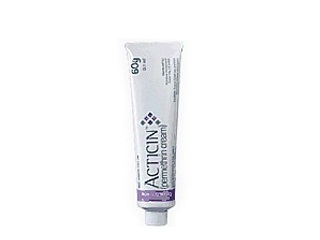
Acticin (Permethrin) – Patient Information (UK)
Acticin contains permethrin, a medicine used to treat certain types of infestations caused by parasites on the skin—most commonly scabies and lice (depending on the product form and strength you have).
This guide is designed to help you understand how Acticin works, how to use it safely and effectively, and what to expect. Always follow the instructions provided with your product and the advice of a healthcare professional.
Quick overview
- Active ingredient: Permethrin
- What it treats: Scabies and certain lice infestations
- How it works: Kills parasites by affecting their nervous system
- How it’s used: Applied to skin (and/or hair, depending on formulation), then washed off after the recommended time
- Common side effects: Mild skin irritation, itching or burning, dry skin
Basic product information
Acticin (permethrin) is available in different preparations depending on the infestation being treated. In the UK, permethrin products are widely used for scabies and head lice. The exact strength and application method can vary, so it is important to check the label for:
- Whether your product is for scabies or head lice
- The concentration
- The recommended contact time before washing off
- Whether re-treatment is advised (often for scabies)
If you’re unsure which Acticin preparation you have, read the patient information leaflet (PIL) that came with your medicine or contact your pharmacist.
How Acticin works (mechanism of action)
Permethrin is a synthetic pyrethroid. It works by interfering with how the parasite’s nerve cells function.
In simple terms, permethrin:
- Targets parasite nerve activity
- Causes paralysis
- Kills the parasite
Important: After treatment for scabies, itching can continue for days or even weeks. This does not always mean the treatment has failed. It may take time for the skin inflammation to settle even after mites are killed.
Pharmacokinetics: how the body handles permethrin
Permethrin is designed to act mainly on the surface layers of the skin or hair and on the parasites living there.
- Absorption: Very limited through intact skin. Some absorption may occur, particularly if applied to large areas or over broken skin.
- Distribution: Small amounts may distribute in the body, but systemic exposure is generally low.
- Metabolism: Metabolised primarily in the liver.
- Elimination: Metabolites are mainly removed from the body via urine.
Because systemic absorption is usually low when used as directed, side effects are typically limited to the application area.
What Acticin is used for (indications)
Depending on the specific product and strength, Acticin (permethrin) is used for:
- Scabies (infestation by the mite Sarcoptes scabiei)
- Head lice (infestation by Pediculus humanus capitis)
In the UK, treatment choice can also depend on local guidance, infestation severity, age, and whether resistance to other treatments has been reported.
When to take action: timing of treatment
The best timing depends on the condition being treated.
Scabies (typical approach)
- Apply as instructed (often to the whole body from the neck down, with special instructions for head/face in young children—see leaflet).
- Leave on for the recommended contact time (commonly around 8–14 hours depending on the product).
- Wash off as directed and change clean clothing and bedding.
- Re-treat if advised (often after about a week, since eggs may survive the first application).
Head lice (typical approach)
- Apply to hair and scalp as directed.
- Leave on for the time stated on your product.
- Wash off and use a fine-tooth lice comb to remove lice and nits (eggs).
- Repeat treatment if the leaflet recommends it and/or if live lice are found after the first treatment.
Re-infestation warning: For scabies and lice, treating contacts or close household members may be essential to prevent re-infection.
Dosing and how to apply
Always follow the dosing instructions in your product leaflet. The details can vary by formulation (for example, scabies versus head lice; cream versus lotion; concentration differences).
Below are general dosing principles used in the UK, but you must use the leaflet for exact instructions.
General dosing principles for scabies
- Area to cover: Usually the whole body, not just itchy spots.
- Contact time: Leave on for the recommended duration.
- Repeat dose: Often recommended after about 7 days.
- Clothes and bedding: Change after treatment and consider cleaning laundry as advised.
General dosing principles for head lice
- Application: Apply evenly to scalp and hair length as directed.
- Comb use: Comb out dead lice and nits.
- Repeat: May be needed depending on product instructions and whether live lice remain.
Special considerations
- Children: Use only as directed for age and body size. Follow product-specific guidance.
- Pregnancy and breastfeeding: Discuss with a healthcare professional or follow national advice if unsure.
- People with eczema or sensitive skin: Permethrin may still be used, but skin irritation is more likely; follow guidance carefully.
Food interactions
No known direct food interactions are expected because permethrin is used topically and systemic absorption is usually low.
However, it can be helpful to remember that:
- For best comfort, apply when you can follow the recommended washing-off time without interruptions.
- If you experience nausea, dizziness, or general unwellness after application (uncommon), seek medical advice.
Alcohol and medicine interactions
Because permethrin is applied to the skin (and absorption is generally low), clinically significant interactions with alcohol are not expected.
Medicine interactions: There are no common known interaction patterns with other medicines for this topical use. Still, it is wise to tell a healthcare professional about any ongoing medicines, especially if you have:
- Multiple skin treatments being used at the same time
- Other topical medications applied to the same area
- Severe skin damage or widespread inflammation
Practical note: Avoid applying other creams, lotions, or oils to the same area unless your pharmacist or leaflet advises it. This helps ensure the correct contact of permethrin with the skin surface.
Safety profile and side effects
Like all medicines, Acticin can cause side effects, though not everyone experiences them.
Common and usually mild side effects
- Skin irritation (burning, stinging, redness)
- Itching (sometimes continues after successful treatment)
- Dry skin
- Tingling or mild discomfort at the application site
Less common side effects
- Swelling or more intense redness
- Allergic-type reactions (rare)
- Temporary worsening of skin symptoms
Seek urgent medical advice if
- You develop facial swelling, breathing difficulties, or widespread hives
- There is severe skin pain, blistering, or signs of infection in the treated areas
- Symptoms are severe or rapidly worsening
Who should take extra care
- People with broken skin or extensive eczema (more absorption/irritation risk)
- Infants and very young children (follow age-specific instructions carefully)
- Anyone who has had allergic reactions to similar products
Practical use tips (to improve success)
Success depends not only on applying permethrin correctly, but also on tackling re-infestation and treating close contacts where needed.
Before you start
- Check the leaflet: confirm your treatment type (scabies vs head lice) and contact time.
- Plan for re-treatment: especially for scabies, where repeat treatment may be needed about a week later.
- Protect your hands: consider using gloves if recommended.
- Prepare clothing and bedding: have clean items ready for after washing off.
During application
- Use enough product: under-application can reduce effectiveness.
- Cover thoroughly: do not miss areas—follow the leaflet for where to apply.
- Avoid eyes and mucous membranes: if it gets into eyes, rinse with water promptly.
- Do not overuse: applying more frequently than recommended increases irritation risk without improving effectiveness.
After application
- Wash off at the correct time and change into fresh clean clothing.
- Clean bedding and towels: follow guidance (for example, laundering at appropriate temperatures and/or bagging if directed).
- Combing: for head lice, use a fine-tooth comb regularly to remove lice and nits.
Follow-through for household prevention
Scabies: Household contacts may need treatment at the same time, even if they are not itchy yet, since scabies can spread through close contact.
Head lice: Close contacts and people in the same setting (e.g., school/class) may need checking and potentially treatment.
Alternative options
Depending on the infestation and local guidance, alternatives may include:
- Other topical scabicides (e.g., treatments containing different active ingredients) where appropriate
- Dimeticone-based treatments for head lice (silicone-based methods)
- Mechanical removal (fine combing) especially for head lice
- Systemic or other therapies in selected situations—your healthcare professional can advise if needed
If Acticin does not appear to work, it may be due to under-application, missed household contacts, incorrect contact time, or ongoing exposure. In these cases, discuss the situation with a pharmacist or clinician rather than repeatedly applying the product.
UK market and legal context
In the UK, medicines containing permethrin are commonly used for scabies and lice and are available through pharmacies and other regulated channels depending on product type and formulation.
Product classification can vary by:
- Whether it is intended for lice or scabies
- The strength and dosage form
- Age group and indications
Regardless of classification, products must meet UK regulatory requirements for quality, safety, and labelling. Always use the medicine according to the instructions and check the product label for the correct formulation.
Recent guidance (high-level): UK healthcare advice commonly emphasises correct application, treating close contacts, repeating scabies treatment when instructed, and managing the environment (laundry/bedding) to reduce re-infestation. Guidance also stresses that itching can continue after successful scabies treatment.
Delivery and availability (UK online pharmacy)
Acticin (permethrin) is typically available from UK pharmacies and online dispensaries, subject to stock and the specific product strength/form you choose.
- Availability: May vary by formulation and strength (scabies vs head lice products)
- Delivery: Usually dispatched quickly once confirmed and packaged for safe transit
- Check packaging on arrival: confirm expiry date and that the product label matches your intended use
If you need help selecting the correct product for scabies or head lice, contact customer support or speak to a pharmacist before ordering.
FAQ
1) Can I use Acticin if I still feel itchy after treatment for scabies?
Yes, itching can continue for days or weeks after scabies has been successfully treated. This is due to skin inflammation and immune response. If new itchy spots continue to appear or symptoms worsen significantly, seek advice to confirm treatment success and whether re-treatment or contact treatment is needed.
2) How long should Acticin stay on the skin?
It depends on the product formulation. Always leave it on for the exact contact time stated on your leaflet (and wash off at the recommended time).
3) Do I need to treat household contacts?
For scabies, treating close contacts at the same time is often recommended to prevent re-infestation. For head lice, close contacts may need checking and treatment depending on findings and local guidance. Follow the leaflet and advice from a pharmacist or clinician.
4) Will Acticin work if I applied it only to itchy areas?
For scabies, effective treatment usually requires covering the whole body area specified in the instructions (not just itchy spots). Incomplete coverage can reduce effectiveness and increase the chance of re-infestation.
5) Is Acticin safe for children?
Acticin can be used in children when used according to the age and condition instructions in the leaflet. Application areas (especially for young children) may differ. If you are unsure, consult a pharmacist.
6) Can I wash my hair or shower after using Acticin?
Yes—after the correct contact time and only as directed. Avoid washing off too early, as this can reduce effectiveness.
7) What should I do if I miss a dose or forget the contact time?
Follow the leaflet. In general, leaving the product on for less time than recommended may reduce effectiveness. Do not apply additional product to compensate without advice—especially for children or if skin irritation is significant.
8) Can Acticin be used alongside other skin creams?
It is best to avoid applying other products to the same areas unless the leaflet or pharmacist advises it. Using multiple products at once can interfere with application and increase irritation risk.
9) Are there any interactions with alcohol or food?
No direct interactions with food are expected. With alcohol, significant interactions are not expected due to the topical use and low systemic absorption when used as directed.
10) How can I tell if treatment is failing?
With scabies, itching may persist even if treatment worked. Treatment is more likely to be failing if you have new infestations, continued spread, or no improvement after the recommended re-treatment schedule. For head lice, failure may be indicated by ongoing presence of live lice after proper combing and repeat treatment if advised. Seek advice if you’re unsure.
Summary
Acticin (permethrin) is a topical medicine used to treat scabies and certain types of lice infestations in the UK. It kills parasites by disrupting their nerve function. When used correctly—covering the correct areas for the recommended time, washing off as directed, and addressing close contacts and household hygiene—Acticin can be an effective option.
If you experience severe irritation or signs of allergy, or if symptoms do not improve as expected, contact a pharmacist or healthcare professional for tailored advice.