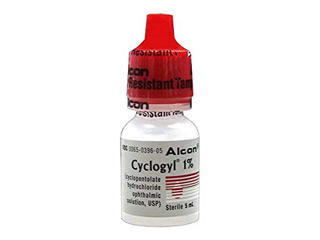
Cyclogyl (Cyclopentolate) Eye Drops – Patient Information (UK)
Cyclogyl contains cyclopentolate, an eye medicine used to temporarily widen (dilate) the pupil and relax the focusing muscle inside the eye. It is commonly used by eye care professionals to help examine the retina and the inside of the eye, and in some cases to treat specific eye conditions.
This page explains what Cyclogyl is, how it works, how it is used, what to expect, and key safety information for people in the United Kingdom.
Quick facts
- Active ingredient: Cyclopentolate
- Medicine type: Antimuscarinic (anticholinergic) eye drops
- Main effects: Dilates the pupil and temporarily reduces focusing ability
- Common reasons for use: Eye examinations and certain ophthalmic conditions
- Common side effects: Blurred vision, light sensitivity, dry mouth (more likely in children)
- Duration: Vision changes usually settle over several hours (sometimes longer)
Basic product information
| Category | Information |
|---|---|
| Brand name | Cyclogyl |
| Generic name | Cyclopentolate |
| Dosage form | Eye drops (ophthalmic solution) |
| How it’s used | Applied to the eye(s) to dilate the pupil and relax accommodation |
| Typical use setting | Often used in clinics for eye examination; may be used under ophthalmic direction for specific conditions |
Note: Product strengths can vary by formulation. Always follow the directions provided with your specific pack and the instructions from your eye care professional.
How Cyclogyl works (mechanism of action)
Cyclopentolate is an antimuscarinic medicine. In the eye, it blocks muscarinic receptors that are involved in two key processes:
- Pupil size (dilatation): By blocking the actions that normally constrict the pupil, Cyclogyl causes the pupil to widen.
- Focusing (cycloplegia): It also relaxes the ciliary muscle, reducing the eye’s ability to focus at near distances. This effect is called cycloplegia.
These effects make it easier for clinicians to view the lens, vitreous, and retina, and can improve the accuracy of certain measurements of vision.
Pharmacokinetics (what happens in the body)
After instillation into the eye, cyclopentolate mainly works locally, with only small amounts expected to enter the bloodstream. However, enough systemic absorption can occur—particularly in:
- Children
- Individuals with reduced tear flow or improper drop technique
- When excessive drops are used
Key points (general):
- Onset: Dilating and focusing effects typically begin within 30–60 minutes.
- Peak effect: Often occurs during the first few hours after dosing.
- Resolution: Vision changes may last several hours; in some people (especially children) it may last longer.
- Systemic metabolism and elimination: Like many antimuscarinic drugs, cyclopentolate can be metabolised in the body and eliminated through normal bodily processes. Systemic effects are usually temporary, but children may be more sensitive.
Practical implication: To reduce unintended systemic exposure, good drop technique is important (see “Practical use tips”).
What Cyclogyl is used for (indications)
Cyclogyl is used in ophthalmology for:
- Eye examinations, including dilation of the pupil to enable views of the fundus (retina and optic nerve) and to assist with examination procedures.
- Cycloplegic refraction (when a clinician needs the focusing mechanism to be temporarily paralysed to measure refractive error more accurately).
- Selected ophthalmic conditions where cyclopentolate’s antimuscarinic action is beneficial, as determined by an eye specialist.
Use can vary based on age, condition, and clinical judgement. Your eye care professional may tailor the dosing schedule.
Timing: when to expect effects
After using Cyclogyl, you can generally expect:
- Blurred near vision (difficulty reading/using a phone) as the eye’s focusing ability is reduced.
- Light sensitivity because the pupil is dilated.
- Difficulty focusing on objects close up and sometimes at intermediate distances.
Typical course of effects:
- Start: often within 30–60 minutes
- Most noticeable: within the first 1–3 hours
- Improvement: gradually over several hours
Advice: Plan activities accordingly. For example, avoid driving until your vision has returned to normal (see safety section and FAQ).
Food interactions
Cyclogyl is an eye drop, so food interactions are generally not expected to be significant.
- No specific food restriction is usually required.
- If cyclopentolate is absorbed systemically (more likely in children), it may cause dry mouth or reduced sweating; these are not usually influenced by food intake.
If you’re concerned about interactions with another medicine, check with a pharmacist or clinician.
Alcohol and medicine interactions
Alcohol
There is no direct, well-established interaction between alcohol and cyclopentolate eye drops. However, Cyclogyl can cause temporary visual disturbance and may rarely cause systemic side effects in sensitive individuals.
- Avoid alcohol on the day of use if you notice dizziness, dry mouth, or any systemic symptoms.
- Do not drive or operate machinery if your vision is affected.
Medicine interactions
Cyclopentolate can have antimuscarinic effects. Interactions are most relevant when other medicines with similar effects are being used.
Tell your eye care professional or pharmacist if you use any of the following:
- Other anticholinergic/antimuscarinic medicines
- Some medicines for overactive bladder or conditions involving reduced secretions
- Medicines that affect the central nervous system (especially in children)
- Other eye drops (including drops containing different pupil-dilating agents)
Important: Do not combine multiple pupil-dilating drops unless instructed by an eye professional.
Dosing (general guidance)
Dosing can vary by age and purpose (for example, routine examination versus cycloplegic refraction). Always use the dosing plan provided with your specific treatment.
Typical patterns used in clinical practice (generalised):
- For eye examinations, one or more drops may be used in the affected eye(s).
- For cycloplegic refraction, clinicians may use a dosing schedule timed to achieve adequate cycloplegia.
How to apply drops safely (see “Practical use tips”) helps ensure the intended effect with minimal systemic exposure.
If you miss a dose: If you miss a scheduled instillation, follow the plan given by your clinician or pharmacist. If you are unsure, seek advice before repeating.
How to use Cyclogyl: practical use tips
Good technique improves effectiveness and reduces unwanted absorption through the nose and throat.
- Wash your hands before and after using the drops.
- Check the bottle for any damage and ensure the solution looks correct.
- Use a mirror if needed.
- Tilt your head back and gently pull down the lower eyelid to form a small pocket.
- Place the prescribed number of drops into the eye without touching the dropper tip to the eye.
- Close your eye gently.
- Nasolacrimal occlusion: press gently on the inner corner of the eye (near the nose) for 1–2 minutes to reduce drainage into the tear duct.
- Wipe away excess with a clean tissue.
- Replace the cap and store as directed.
Contact lenses
It is often advised to remove contact lenses before using many ophthalmic drops, and to wait before reinserting. Follow the instructions on your specific product or from your clinician. If unsure, ask your pharmacist.
When using other eye drops
- Wait between different drops as advised (commonly at least 5 minutes), to avoid dilution.
- Use eye ointments last unless your clinician tells you otherwise.
Safety profile: side effects and when to seek help
Most people tolerate Cyclogyl well when used correctly. However, because it can affect the pupil and focusing ability, the most common effects are related to vision.
Common or expected effects
- Blurred vision (especially near vision)
- Light sensitivity
- Dry mouth (more noticeable in some people; more likely in children)
- Temporary stinging or discomfort after instillation
Less common systemic effects
Systemic absorption can lead to antimuscarinic-type effects, which may include:
- Fast heartbeat (tachycardia)
- Flushing and warmth of the skin
- Unusual sleepiness, restlessness, or behavioural changes (especially in children)
- Difficulty passing urine (rare)
Seek urgent medical advice if
Contact urgent medical help or a healthcare professional immediately if a person—particularly a child—develops:
- Severe or worsening eye pain
- Significant redness with discomfort
- Severe headache, nausea, or vomiting (could indicate increased eye pressure in susceptible individuals)
- Confusion, marked drowsiness, or severe behavioural changes
- Breathing difficulties
People at higher risk: Those with a history of narrow-angle glaucoma or susceptibility to angle closure should discuss use with an eye specialist. Dilating drops can precipitate problems in predisposed eyes.
Driving, work, and daily activities
Cyclogyl typically causes blurred vision and light sensitivity. In the UK, driving rules follow guidance from clinicians and the general “fitness to drive” principle.
- Avoid driving until your vision returns to normal and you can see clearly in all conditions.
- Consider sunglasses outdoors, especially in bright environments.
- Be cautious with stairs, ladders, and operating machinery if depth perception is affected.
Alternative options
Depending on why Cyclogyl is being used, clinicians may consider other options. Alternatives can include:
- Other cycloplegic or mydriatic eye drops (to dilate the pupil and/or relax focusing).
- Different formulations or dosing strategies for age-related sensitivity, for example when assessing children.
Your eye care professional will choose the most appropriate medicine based on the goal of treatment, your eye anatomy, age, and risk factors.
UK market and legal context (what to expect)
In the United Kingdom, ophthalmic medicines are regulated and supplied in accordance with UK medicines legislation and professional guidance. The availability of specific eye drops may vary depending on:
- The product’s classification (for example, whether it is available only through certain routes of supply).
- The intended use (diagnostic versus therapeutic), and whether special caution is required for certain patient groups.
- Manufacturer instructions and local clinical pathways.
After dilation, people may experience temporary visual changes. Clinicians typically provide advice on precautions such as driving and sun protection.
Important: If you have a history of glaucoma, severe eye pain, or prior reactions to similar drops, inform your eye care professional before use.
Recent guidance and clinical considerations
While specific “recent guidance” can evolve over time and depends on local services, common UK clinical considerations for cycloplegic/midriatic drops include:
- Risk assessment for angle closure in susceptible patients (particularly where there is narrow anterior chamber anatomy).
- Child safety focus because systemic effects are more likely in younger patients if drops are misused or excessive.
- Minimising systemic absorption using nasolacrimal occlusion and correct dosing technique.
- Clear patient instructions on visual impairment, timing, and when to seek help.
Your clinician may adjust timing and dose to balance diagnostic needs against comfort and safety.
Delivery and availability in the UK
Depending on the pharmacy and product pack, Cyclogyl may be available for online ordering with UK delivery. Delivery times can vary by supplier, shipping method, and stock availability.
- Check product availability on the website before placing an order.
- Storage: Follow the manufacturer’s storage instructions (commonly room temperature away from direct sunlight, unless specified otherwise).
- Expiry: Do not use after the expiry date on the pack.
If you need Cyclogyl for an upcoming eye appointment, consider ordering early to allow for processing and delivery time.
FAQ
1) How long do the effects of Cyclogyl last?
Effects usually begin within 30–60 minutes. Many people notice blurred vision and light sensitivity for several hours. In some cases—particularly in children—effects may last longer. Your clinician will often advise the safest time to resume activities such as reading and driving.
2) Can I drive after using Cyclogyl?
Typically, no. Cyclogyl can cause blurred vision and glare from a dilated pupil. Do not drive until your vision has returned to normal and you feel confident seeing clearly under typical driving conditions.
3) Will Cyclogyl cause pain?
It may cause mild temporary stinging or discomfort. However, significant eye pain, worsening redness, severe headache, nausea, or vomiting after dilation should be assessed urgently, as these can indicate rare but serious complications.
4) Is Cyclogyl safe for children?
Cyclopentolate is used in paediatric ophthalmology, but children may be more sensitive to systemic antimuscarinic effects. Using the correct dose and applying pressure to the inner corner of the eye (nasolacrimal occlusion) for 1–2 minutes helps reduce systemic absorption. Always follow clinician directions closely.
5) What should I do if I accidentally use too many drops?
Use caution: excessive drops may increase the chance of side effects. If too many are used, contact a pharmacist or healthcare professional promptly for advice, especially for children.
6) Can I wear contact lenses?
Often you should remove contact lenses before instilling dilating drops. Follow the instructions for the specific product, and ask your pharmacist if you’re unsure when to reinsert lenses.
7) Does Cyclogyl interact with other eye drops?
Potential interactions exist in the sense that using multiple dilating or focusing drops together may increase effects or side effects. If you’re using other eye medicines, inform your clinician or pharmacist and follow spacing advice (commonly at least 5 minutes between different drops).
8) What if I feel very unwell after using Cyclogyl?
Seek urgent medical advice if you experience severe headache, confusion, marked drowsiness, breathing problems, or severe nausea/vomiting. For eye-related emergencies (severe pain/redness), contact urgent eye services or emergency care.
9) Is there any food or alcohol advice?
No specific food interactions are typically expected. Alcohol isn’t known to have a direct interaction, but because Cyclogyl can affect vision and sometimes cause dry mouth or systemic symptoms, it’s sensible to avoid alcohol if you feel unwell or if your vision is impaired.
10) What are common practical steps to reduce side effects?
Use the correct number of drops, keep the bottle tip clean, avoid touching the eye, and press the inner corner of the eye for 1–2 minutes after dosing. Also wear sunglasses outdoors and rest your eyes as vision blurs.
Summary
Cyclogyl (cyclopentolate) is a cycloplegic and mydriatic eye drop used to dilate pupils and reduce focusing, helping with eye examinations and selected ophthalmic care. You can expect blurred vision and light sensitivity for several hours, so plan activities accordingly. With correct technique—especially nasolacrimal occlusion—systemic side effects can be reduced. If you experience severe pain, significant redness, or systemic symptoms, seek urgent medical advice.
If you are unsure about how to use Cyclogyl or you have a history of glaucoma or angle-closure risk, speak with an eye care professional or pharmacist before use.