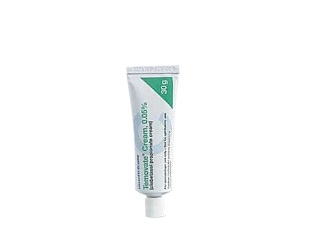
Clobetasol 0.05% Cream / Ointment (High-Potency Corticosteroid) — Patient Information (UK)
Clobetasol 0.05% is a very potent steroid medicine used to reduce inflammation and relieve symptoms in certain skin conditions. It belongs to the group of corticosteroids, which work by dampening the immune and inflammatory responses in the skin.
This page is designed to be clear and patient-friendly, with practical guidance on how to use clobetasol safely, what to expect, and when to seek medical advice.
1) Basic product information
- Active ingredient: Clobetasol propionate 0.05%
- Strength: 0.05% (high potency)
- Medicinal form: Cream or ointment (depending on the product you receive)
- Drug class: Topical corticosteroid (very potent)
- Common brand names: May vary (availability depends on pharmacy/stock)
- Who it is for: Adults and children in specific circumstances, depending on clinician guidance and product licence
Important: Clobetasol products are intended for short-term, targeted treatment. Overuse can increase the risk of side effects.
2) How clobetasol works (mechanism of action)
Clobetasol is a corticosteroid. When applied to the skin, it helps by:
- Reducing inflammation: It suppresses the release of inflammatory chemicals.
- Calming an overactive immune response: It lowers immune activity in the skin.
- Reducing redness and itching: By controlling inflammation, symptoms often improve.
- Slowing abnormal skin cell turnover: In conditions with thickened or scaly skin, the skin may become less thick and less scaly.
Because it is very potent, small amounts can be effective for suitable conditions.
3) Pharmacokinetics (what happens in the body)
Topical medicines act mostly on the skin, but some absorption can occur.
- Skin absorption: Absorption is usually low through intact skin. It can increase if the area is inflamed, blistered, or covered by occlusive dressings.
- Effect of skin area: Larger treated areas and longer use can increase systemic absorption.
- Metabolism: Absorbed clobetasol is metabolised primarily in the liver.
- Elimination: Metabolites are excreted via the kidneys and to a lesser extent through bile.
Why this matters: Excess exposure increases risk of steroid-related side effects (for example, effects on skin integrity and, rarely, effects on the body’s hormonal system).
4) Typical use and timing
Clobetasol 0.05% is used to treat inflammatory skin conditions where a very strong topical steroid is needed. Typical use is:
- Frequency: Often applied once or twice daily as directed for your condition.
- Duration: Typically short-term. Prolonged or continuous use is generally discouraged.
- Step-down approach: Many treatment plans reduce potency/frequency once symptoms improve (for example, switching to a milder steroid).
Timing tip: Apply at the time of day that best suits your routine, and try to use the same schedule each day. Wash your hands before and after application unless your hands are the treatment area.
5) Indications (what clobetasol is used for)
Clobetasol is commonly used for short-term control of significant inflammation and itch in conditions such as:
- Severe eczema (particularly when symptoms are resistant to milder treatments)
- Psoriasis (where topical steroid is appropriate—certain forms may require specialist oversight)
- Dermatoses responsive to corticosteroids (as determined by a healthcare professional)
Do not use clobetasol on skin that is affected by infections you have not been assessed for. Steroids can sometimes worsen infections or mask symptoms.
6) Dosing (how much to apply)
Dosing must be tailored to the affected area and skin type. Your product packaging or clinician instructions should be followed carefully.
How to measure (finger-tip unit)
In the UK, a common method used to estimate topical steroid quantity is the “finger-tip unit (FTU)”:
- An FTU is the amount of cream/ointment squeezed from the tip of an adult finger.
- It roughly covers an area of about two adult handprints (or ~~10 mm thickness area as taught in practice).
Practical note: Using less rather than more is usually safer with very potent steroids unless specifically advised.
General guidance
- Apply a thin layer to the affected area only.
- Avoid applying to large areas unless instructed.
- Once symptoms settle, stop or reduce frequency/potency as advised.
Important: If you are treating a child, the safest approach depends on the child’s age, the area affected, and the severity—follow the licensed product directions and seek professional advice if unsure.
7) Mechanism-related expectations (how quickly it should work)
Many people notice symptom improvement within a few days. A typical pattern is:
- First 24–72 hours: Redness and itching may start to reduce.
- After several days: Scales/thickening may improve.
- After short course: Treatment is usually stopped or stepped down to avoid flare-ups and reduce risk.
If there is no improvement after a short period (for example, about a week) or symptoms worsen, stop using and seek advice, as the diagnosis may need reassessment or an infection may be present.
8) Practical use tips (how to apply)
Step-by-step application
- Wash and dry the affected area.
- Apply a thin film of clobetasol and gently rub in.
- Wash your hands after application (unless treating your hands).
- Use consistently for the prescribed time period.
Choose the right formulation
- Cream: Often preferred for weeping/oozing areas (though your clinician may tailor this).
- Ointment: More occlusive and may be preferred for very dry, thick, or scaly skin.
Avoid common pitfalls
- Do not use under occlusive dressings (unless specifically instructed).
- Avoid face, groin, and armpits unless clearly directed by a healthcare professional, because skin there is thinner and side effects may be more likely.
- Do not apply more often than recommended.
- Do not use longer than advised even if symptoms improve.
9) Food interactions
Because clobetasol is a topical medicine, food interactions are not typically expected. Clinically significant interactions through diet are unlikely.
However: If you are using clobetasol on a large area, under occlusion, or for extended periods, higher systemic absorption could occur, which might theoretically increase the importance of your overall medication and health status. In such cases, consult a healthcare professional.
10) Alcohol and medicine interactions
Alcohol
There is no specific, well-established interaction between clobetasol topical use and alcohol.
Practical caution: If you feel unwell or have side effects such as unusual dizziness or flushing (rare for this medication), stop and seek advice.
Other medicines
Topical clobetasol has limited systemic exposure in most normal use. However, important considerations include:
- Other corticosteroids: Using another steroid product (topical or systemic) at the same time can increase total steroid exposure.
- Immunosuppressive medicines: If you are on medicines that suppress the immune system, infections may be more problematic.
- Skin infection treatments: Steroids may worsen undiagnosed infections (for example, fungal or viral infections). If you are also using antifungals or antivirals, ensure the plan is coordinated.
Seek advice if you are unsure whether your condition might be infectious or if you have complex medical treatment.
11) Safety profile (side effects and who should be careful)
As a very potent steroid, clobetasol can cause side effects, especially with higher-dose use, long duration, use on sensitive areas, or under occlusion.
Common local side effects
- Skin irritation (burning or stinging)
- Redness or increased sensitivity
- Dryness or temporary change in appearance
More serious or long-term local side effects
- Skin thinning (atrophy)
- Stretch marks (striae)
- Visible blood vessels (telangiectasia)
- Rebound flare after stopping suddenly (especially if used for longer than recommended)
- Perioral dermatitis or steroid-related acne-like eruptions (more likely on face)
Systemic (whole-body) effects — rare with correct use
With excessive or prolonged use, absorption can be high enough to affect the body’s steroid balance. Possible signs include:
- Suppression of the adrenal glands (rare)
- In very rare cases, features related to high steroid exposure
Who should take extra care
- Children (higher absorption per body weight possible)
- People using it on large areas
- Those using occlusive dressings
- People using for longer than recommended
- Anyone with existing skin infections or suspect infection
- Pregnancy/breastfeeding situations where risks and benefits should be reviewed by a clinician
Stop and seek advice urgently if
- Your skin becomes more painful, swollen, or infected
- You develop pus-filled lesions or worsening rash
- You suspect a condition that is not eczema/psoriasis (for example, ringworm/fungal infection)
- You experience unusual systemic symptoms or severe skin changes
12) Safety advice specific to steroid skin products
- Do not use on broken skin unless advised.
- Do not apply to eyes or around the eyelids unless specifically directed.
- Do not treat widespread rash without medical review.
- Keep track of quantity and days used to avoid accidental overuse.
13) Alternative options (what you could consider)
Depending on your diagnosis and severity, alternatives may include:
- Milder topical corticosteroids (often safer for longer use or thinner-skin areas)
- Topical calcineurin inhibitors (for some sensitive-area conditions under specialist advice)
- Moisturisers/emollients as a core long-term strategy for eczema
- Non-steroid anti-inflammatory skin treatments where appropriate (based on diagnosis)
- Phototherapy or systemic treatments for more extensive or resistant disease (specialist-led)
Advice: Alternatives depend strongly on the condition being treated. If you are unsure whether clobetasol is the right choice, a pharmacist or clinician can help assess your situation.
14) UK market & legal context (plain-English)
In the United Kingdom, topical corticosteroids are regulated medicines. Clobetasol 0.05% products may be supplied under the medicine’s legal category and may require a pharmacy review process based on the product and your circumstances.
- Pharmacy assessment: Online and in-store supply often includes checks to ensure suitability and safe use (for example, age, site of application, and possible infection).
- Product strength matters: Clobetasol is a very potent steroid, so supply may include additional safeguards compared with milder steroids.
- Patient information: Packaging and instructions must clearly state dosing limits and precautions.
Recent guidance note: In recent years, UK clinical practice has increasingly emphasised short courses, appropriate potency selection, and avoiding high-potency steroids on sensitive areas without close review—particularly to reduce steroid-related skin effects.
15) Recent guidance trends (what clinicians often emphasise)
While exact recommendations vary by condition and individual patient factors, common trends in UK dermatology and prescribing practice include:
- “Treat to target”: Use the right strength to control symptoms, then step down or stop.
- Minimise exposure: Avoid unnecessary long-term daily application of very potent steroids.
- Review if not improving: If there is no response, clinicians re-check the diagnosis and consider infection or alternative treatment.
- Use safe application methods: Encourage clear instructions about thin layers, limited areas, and wash hands after use.
- Consider maintenance plans: For chronic conditions, moisturisers and longer-term strategies may reduce reliance on potent steroids.
16) Delivery and availability (UK)
Clobetasol 0.05% products may be available online through UK pharmacies subject to stock levels and pharmacy regulations. Delivery availability and times can vary by supplier and location.
- Home delivery: Often available across the UK (coverage depends on provider).
- Processing time: Order processing may take place before dispatch.
- Tracking: Many services offer dispatch notifications and tracking links.
Availability tip: If a specific formulation (cream vs ointment) is unavailable, you may be offered an equivalent product strength/form—always confirm the strength (0.05%) and the formulation before use.
17) FAQ
How long can I use clobetasol?
Clobetasol 0.05% is usually intended for short-term use. Follow the exact instructions provided with your product. If symptoms do not improve quickly, stop and seek advice rather than continuing.
Can I use it on my face?
Because clobetasol is very potent, use on the face should only be done if a clinician has advised it. Facial skin is thinner and is at higher risk for steroid-related effects.
Is clobetasol safe for children?
Use in children should only follow the licensed directions and a clinician’s advice. Children can absorb more steroid through the skin relative to their body size, increasing risk.
What if the rash gets worse after starting?
Worsening symptoms may indicate an infection or incorrect diagnosis. Stop using clobetasol and contact a pharmacist or clinician for advice.
Do I need to stop suddenly?
If used briefly as directed, stopping is often straightforward. However, if you have used it frequently or for longer than recommended, you may need a step-down plan to reduce rebound effects. Ask a healthcare professional for guidance.
Can I cover the area with a dressing?
Do not use occlusive dressings unless specifically instructed. Occlusion can significantly increase absorption and side effects.
Can I moisturise while using clobetasol?
Yes. You can apply moisturiser to help protect skin, but apply clobetasol first (unless advised otherwise) and allow it to absorb. Avoid mixing products together in the same hand.
Will clobetasol cause weight gain or mood changes?
These effects are not typical for topical use when used correctly. Whole-body steroid effects are rare, but the risk increases with high-dose, long-term use or treatment over large areas.
Is it safe to drink alcohol?
There is no known direct interaction between clobetasol and alcohol. If you have other health conditions or medications, consider asking a healthcare professional for personal advice.
What should I do if I miss a dose?
Apply when you remember only if it is within the recommended schedule. Do not apply extra amounts to make up for a missed dose.
18) Summary (quick reminder)
- Clobetasol 0.05% is a very potent topical steroid for inflammatory skin conditions.
- Use a thin layer on the affected area only, for a short course, as directed.
- Avoid sensitive areas and occlusion unless told otherwise.
- If there is no improvement or symptoms worsen, seek advice promptly.
Always read the patient information leaflet supplied with your medicine for the most accurate instructions for your specific product.