Spiriva (Tiotropium Bromide) – Patient-Friendly Guide (UK)
Spiriva is a medicine containing tiotropium bromide, an inhaled medicine used to help people breathe more easily in long-term lung conditions. It works by relaxing the airway muscles and reducing breathlessness.
This page explains what Spiriva is, how it works, how it is typically used, possible side effects, important safety information, and practical tips for correct inhalation—aimed at helping you use the medicine more confidently.
| Section | Key details |
|---|---|
| Active ingredient | Tiotropium bromide |
| Medicine type | Inhaled long-acting muscarinic antagonist (LAMA) |
| Common uses | Chronic Obstructive Pulmonary Disease (COPD); sometimes in combination regimens for airflow diseases as advised |
| How it works | Opens the airways and helps reduce symptoms over the day |
| Typical dosing | Usually once daily by inhalation (depends on device and strength) |
| Onset | Helps within minutes for many people; full benefit is maintained with regular use |
| Important note | Not a “rescue” medicine for sudden breathing trouble |
Basic product information
Spiriva contains tiotropium bromide, which belongs to the group of medicines known as antimuscarinics (muscarinic antagonists). These medicines relax the airways by blocking specific signals in the lungs that can cause narrowing of the airways.
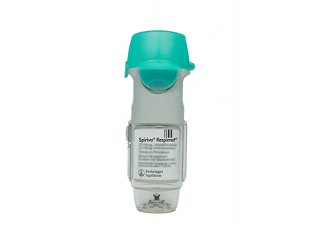
Spiriva is available in different inhalation devices in various countries. In the UK, you may see products such as:
- Spiriva Respimat (often used as a once-daily mist inhalation)
- Spiriva HandiHaler (often used as a once-daily capsule inhalation via the device)
Always check the exact product name and device instructions on your packaging. The dosing instructions can differ slightly between devices.
Mechanism of action (how Spiriva works)
In your lungs, nerves release substances that bind to muscarinic receptors. When these receptors are activated, the airways can become narrower (bronchoconstriction) and mucus clearance can be reduced—both of which worsen symptoms.
Tiotropium bromide blocks muscarinic receptors (particularly the M3 receptor in airway smooth muscle). This leads to:
- Airway relaxation (bronchodilation)
- Reduced airway narrowing
- Improved airflow over an extended period
- Less breathlessness and improved lung function when used regularly
Because it is a long-acting medicine, it is designed to help maintain control of symptoms throughout the day.
Pharmacokinetics (how the body handles tiotropium)
After inhalation, tiotropium primarily acts locally in the lungs. Some absorption occurs into the bloodstream. The exact levels vary depending on the device, technique, and patient factors.
- Absorption: Absorbed from the lungs to a limited extent.
- Distribution: Tiotropium distributes in the body after absorption; the medicine is designed mainly for local pulmonary effects.
- Metabolism: Metabolism is relatively limited.
- Elimination: Primarily excreted through the kidneys (important for people with kidney impairment).
- Half-life: Long-acting effect is due to slow dissociation from receptors and gradual elimination.
Kidney function matters: People with reduced kidney function may have higher exposure to tiotropium. Your clinician may adjust your suitability for use and may monitor you more closely.
Typical use in the UK
Spiriva is commonly used in the UK to treat chronic obstructive pulmonary disease (COPD), where it can:
- Improve symptoms such as breathlessness
- Help maintain better airflow
- Reduce risk of flare-ups (in some patients, depending on overall treatment plan)
Depending on your diagnosis and severity, Spiriva may be used as:
- Monotherapy (on its own)
- Add-on therapy alongside other inhalers (e.g., inhaled corticosteroids and/or long-acting beta-agonists), as advised
It is usually part of a broader COPD management plan that may also include smoking cessation support, vaccinations, and pulmonary rehabilitation.
Timing and when to take it
Spiriva is generally taken . Many people choose a consistent time each day to help remember it. You can take it with or without food (see food section for more details).
Practical timing tips:
- Take at the same time each day if possible.
- If you miss a dose, follow the instructions on your product leaflet. In many cases, you take it when remembered unless it is close to the next dose—avoid doubling up.
- Use the inhaler correctly—technique has a major effect on how well the medicine works.
Food interactions
Because tiotropium is taken by inhalation and acts mainly in the airways, food interactions are not expected. In most cases, you can take Spiriva without considering meals.
If you have specific dietary or digestive issues, or if you are taking several medicines, it is still a good idea to check with a pharmacist or clinician—especially if you have swallowing difficulties.
Alcohol and medicine interactions
Alcohol
There is no common, well-established direct interaction between tiotropium and moderate alcohol consumption. However, alcohol may worsen breathlessness or dizziness in some people—particularly those with COPD or other health conditions.
If alcohol makes your symptoms worse (for example, more coughing or shortness of breath), consider reducing intake and discuss with your healthcare professional.
Other medicines (important interactions)
The most important interaction considerations for tiotropium relate to other antimuscarinic medicines. Using multiple antimuscarinics may increase the risk of side effects (such as dry mouth, constipation, blurred vision, urinary retention).
Tell your pharmacist or clinician if you take any of the following:
- Other antimuscarinic bronchodilators (e.g., additional LAMAs)
- Medicines with antimuscarinic effects (some medicines for overactive bladder, certain stomach cramps, some allergy medicines)
- Other inhalers in combination therapy (so the overall regimen is appropriate)
Also mention all your medicines including over-the-counter products and herbal remedies. A pharmacist can help you check whether your current regimen is compatible with tiotropium.
Indications (what Spiriva is used for)
In the UK, Spiriva is indicated for the treatment of:
- COPD (including chronic bronchitis and emphysema), to help improve symptoms and reduce deterioration
The exact indication and eligibility can vary by product and your health status. Always refer to the leaflet supplied with your specific Spiriva inhaler.
Not for sudden breathing attacks: Spiriva is not intended for immediate relief of an acute episode of breathlessness. For sudden symptoms, your healthcare professional may prescribe a short-acting rescue inhaler (often a reliever such as a short-acting beta-agonist).
Dosing (how much and how often)
Dosing depends on the device and the specific Spiriva presentation you have. Many Spiriva regimens are once daily, but the number of inhalations per day differs by product type.
Typical dosing principles
- Once daily inhalation is common.
- Do not use more than prescribed or change your dose without advice.
- Use correctly: incorrect technique can reduce benefit and increase side effects.
Example dosing overview (check your specific product leaflet)
Below is an illustrative summary. Confirm your exact dose by reading your patient information leaflet:
| Product/device (examples) | Typical frequency | How it’s taken | Key reminders |
|---|---|---|---|
| Spiriva Respimat | Often once daily | Inhalation of aerosol “mist” | Priming/setting steps may be needed when starting a new cartridge/device. |
| Spiriva HandiHaler | Often once daily | Inhale powder from a capsule using the HandiHaler | Only use the capsules in the HandiHaler device; do not swallow the capsule. |
If you are unsure which exact Spiriva you have, ask your pharmacist to confirm the dosing instructions specific to your product and device.
Practical use tips (getting the best from Spiriva)
Correct inhaler technique is essential. Many people do not get the full benefit from inhaled medicines because of technique issues. If possible, check your technique with a nurse, pharmacist, or inhaler training service.
General inhaler tips
- Prepare the device as directed by the leaflet.
- Breathe out gently before inhaling the medicine (do not breathe into the device).
- Inhale steadily and deeply when instructed (depending on device type).
- Hold your breath for a short time if your leaflet recommends it.
- Close and store the device properly after use.
Important care points
- Keep your inhaler clean and dry as described in the instructions.
- Replace parts (if required) according to the leaflet or pharmacy guidance.
- Check expiry dates and ensure you have enough supplies for travel.
Managing side effects while using correctly
- If you experience dry mouth, try sipping water and practicing good oral hygiene.
- If you notice worsening urinary symptoms, tell your clinician promptly.
- Seek urgent help for severe allergic reactions or breathing deterioration.
Safety profile (who should be careful and possible side effects)
Like all medicines, Spiriva can cause side effects. Many people tolerate it well, but it’s important to know what to watch for.
Common side effects
- Dry mouth
- Constipation
- Throat irritation or mild cough after inhalation
- Slight changes in taste or mouth discomfort in some people
- Urinary retention (difficulty passing urine), particularly in people with bladder outflow obstruction
- Eye problems if mist contacts the eyes (e.g., pain, blurred vision, halos around lights)
- Rapid heartbeat or palpitations in some people
- Allergic reactions such as rash, itching, swelling, or breathing difficulty
- Sudden worsening breathlessness that does not respond to your reliever
- Swelling of the face/lips/tongue or severe rash
- Severe eye pain, marked blurred vision, or halos around lights after inhalation
- Inability to urinate or severe urinary pain
- Glaucoma (especially narrow-angle glaucoma)
- Urinary retention or enlarged prostate (prostate symptoms)
- Kidney problems (tiotropium is eliminated through the kidneys)
- History of severe allergic reactions to inhaled medicines
- Assess symptoms and exacerbation risk regularly
- Use inhaler therapies optimally (including correct technique)
- Choose medicines that best match your symptom burden and future risk
- Coordinate care across primary and secondary services
- Long-acting beta-agonists (LABAs)
- Other LAMAs (different muscarinic antagonists)
- Combination inhalers (e.g., LABA/LAMA, and in some patients LABA/LAMA plus inhaled corticosteroid)
- Confirm the exact product (e.g., Respimat vs HandiHaler) and pack size
- Check device compatibility if you already use an inhaler
- Delivery options and estimated arrival times
- Cold/temperature sensitivity: inhalers typically store at normal conditions, but follow your leaflet
Less common but important side effects
When to get urgent medical help
Seek urgent advice or emergency care if you experience:
Who should be extra cautious?
Discuss your suitability with a pharmacist or clinician if you have:
If you have any of the above conditions, you may still be able to use Spiriva, but monitoring and device use precautions may be needed.
Pregnancy and breastfeeding
The decision to use tiotropium during pregnancy or breastfeeding depends on your individual situation. If you are pregnant, trying to conceive, or breastfeeding, discuss risks and benefits with a healthcare professional.
Overdose and missed doses
Missed dose
If you miss a dose, take it as advised in your product leaflet. Do not take extra doses to make up for a missed one unless told to.
Overdose
Taking more than prescribed may increase the risk of side effects. If you think too much has been taken, contact medical services or a pharmacist for advice.
Recent guidance and context (UK)
In the UK, COPD is commonly managed using guidance and shared decision-making between patients and healthcare professionals. Spiriva is a LAMA (long-acting muscarinic antagonist) and may be used as part of first-line or add-on therapy depending on symptoms, exacerbation history, lung function, and individual response to treatment.
Current UK practice aims to:
Local formularies and prescribing guidance may influence which patients are offered specific inhalers and in what order. If you want up-to-date information for your situation, ask your GP, respiratory nurse, or pharmacist.
Alternative options
If Spiriva is not suitable, not tolerated, or not effective enough, your healthcare professional may consider alternatives depending on your COPD diagnosis and current regimen.
Other long-acting bronchodilators
Reliever medicines
For sudden symptoms, reliever inhalers (short-acting) are typically used. Spiriva is not a reliever.
Never switch inhaler types without checking the device instructions and dosing schedule, as techniques and dosing differ.
Delivery and availability (UK online pharmacy)
Availability can vary depending on your location, current stock, and the specific Spiriva device or strength. Many UK online pharmacies offer home delivery with appropriate packaging to protect inhalers during transit.
Before ordering, consider:
If you need help choosing the correct product, contact the pharmacy’s customer support or speak with a pharmacist.
UK market and legal context (important note)
Spiriva is an established medicine used in the UK for long-term treatment of COPD. UK supply is regulated to help ensure quality and safe use. Online pharmacies must meet legal and professional standards regarding medicine supply, patient information, and safeguarding.
You should only buy medicines from reputable providers that can supply genuine products and provide appropriate patient information for safe use.
FAQ about Spiriva (Tiotropium Bromide)
1) What is Spiriva used for?
Spiriva (tiotropium bromide) is used to treat COPD to help improve breathing and reduce symptoms when taken regularly.
2) Is Spiriva a reliever for sudden breathlessness?
No. Spiriva is a long-acting maintenance inhaler. It is not intended for immediate relief of sudden breathing problems. Use your prescribed reliever for sudden symptoms and follow your action plan.
3) How often should I take Spiriva?
It is typically taken once daily. The exact number of inhalations depends on the specific Spiriva device (Respimat vs HandiHaler). Always follow your product leaflet and the instructions provided by your healthcare professional.
4) Can I take Spiriva with food?
Yes. Food interactions are not expected. You can generally take Spiriva with or without meals.
5) What if I forget a dose?
Check your patient information leaflet for what to do. In general, do not take a double dose to make up for a missed one. If you are unsure, ask a pharmacist.
6) What are the most common side effects?
Common side effects include dry mouth and constipation. Some people may also experience mild throat irritation.
7) What serious side effects should I watch for?
Seek urgent help if you have signs of an allergic reaction, severe eye pain or blurred vision, severe difficulty passing urine, or rapid worsening breathlessness.
8) Can Spiriva interact with other medicines?
The most relevant interaction is with other medicines that have antimuscarinic effects (including other LAMAs). Tell your pharmacist about all medicines you take—especially other inhalers and medicines for overactive bladder or similar conditions.
9) Does alcohol affect Spiriva?
There is no common direct interaction. However, alcohol can worsen breathlessness or dizziness in some people, so it’s best to monitor how you feel.
10) How do I know if my inhaler technique is correct?
If you’re not getting symptom relief or you have repeated flare-ups, your technique may need checking. A pharmacist or nurse can observe you and help correct common issues (timing, breathing pattern, seal, and breath-hold).
11) I have kidney problems. Can I still use Spiriva?
Tiotropium is eliminated mainly by the kidneys. If you have kidney impairment, discuss with a healthcare professional. They may advise monitoring or precautions.
12) Can Spiriva cause eye problems?
Rarely, medicines delivered as mist or powder can irritate the eyes. Avoid getting it in your eyes. If you develop severe eye pain, blurred vision, or halos around lights, seek urgent medical advice.
Summary
Spiriva (tiotropium bromide) is a long-acting inhaled medicine used in the treatment of COPD. It helps by blocking muscarinic signals that narrow the airways, supporting easier breathing when taken consistently.
For best results, use your Spiriva inhaler exactly as instructed, keep to a once-daily routine, and do not treat sudden breathlessness with Spiriva. If you have questions about side effects, technique, or suitability (for example, glaucoma, urinary symptoms, or kidney issues), speak to a pharmacist or healthcare professional.
Important: Always read the patient information leaflet supplied with your Spiriva inhaler and follow the guidance from your healthcare professional. If symptoms worsen or you are concerned, seek medical advice promptly.
Additional information
| Dosage: No selection | 9mcg |
|---|---|
| Package: No selection | 1 inhaler, 3 inhaler, 6 inhaler |