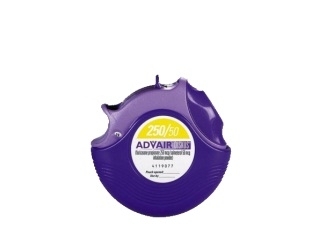

Advair Diskus (Salmeterol + Fluticasone) — Patient-Friendly Guide (UK)
Advair Diskus is an inhaler used to help control long-term breathing problems such as asthma and chronic obstructive pulmonary disease (COPD). It combines two medicines in one device:
- Salmeterol — a long-acting bronchodilator (helps keep the airways open)
- Fluticasone — an inhaled corticosteroid (reduces airway inflammation)
This page explains how Advair Diskus works, how it’s used, safety considerations, and what to expect in everyday life in the United Kingdom.
Basic product information
Product name: Advair Diskus
Active ingredients: Salmeterol + Fluticasone
Medicine type: Combination inhaled therapy (long-acting bronchodilator + inhaled corticosteroid)
Inhaler device: Diskus (a dry powder inhaler)
Strengths: Available in different strengths depending on the fluticasone content. Your UK product label and clinician instructions will specify the exact strength and number of inhalations per day.
Tip: Always check the strength printed on your device and follow your individual treatment plan.
How Advair Diskus works (mechanism of action)
Advair Diskus is designed to manage symptoms by addressing two key parts of breathing difficulty:
- Fluticasone (inhaled corticosteroid): Reduces inflammation in the airways. This can lower swelling, mucus production and overall airway sensitivity. Over time, this leads to fewer flare-ups and better day-to-day control.
- Salmeterol (long-acting beta2 agonist, LABA): Relaxes the smooth muscle around the airways and keeps them open for up to 12 hours (long-acting). This improves airflow and helps prevent symptoms from returning between doses.
What this means in practice: Advair Diskus is mainly a controller medicine. It is not intended to relieve sudden breathing attacks. A separate reliever inhaler (such as a short-acting bronchodilator) is usually used for quick symptom relief.
Pharmacokinetics (how the body handles the medicine)
Because Advair Diskus delivers medicine directly to the lungs, much of the effect is local (in the airways). However, some medicine is swallowed and absorbed through the gut.
- Absorption: Inhaled fluticasone and salmeterol can be absorbed to varying degrees. In many patients, the majority of medication acts in the lungs; a portion is swallowed and later absorbed from the gastrointestinal tract.
- Metabolism: Fluticasone is metabolised primarily by CYP3A4 in the liver (and also in the gut). Salmeterol also undergoes metabolic processing (including via CYP pathways).
- Distribution: Both medicines can bind to blood proteins to some extent.
- Elimination: Metabolites are eliminated mostly through bile and faeces (with some urinary excretion).
Clinical relevance: Because fluticasone and salmeterol can be influenced by liver enzyme activity, drug interactions (especially with strong CYP3A4 inhibitors) are important.
Typical use in the UK
Advair Diskus is typically used for:
- Asthma: For people whose asthma is not adequately controlled with an inhaled corticosteroid alone, or when a combination approach is appropriate according to UK clinical guidance.
- COPD: For some patients with COPD where symptoms and exacerbation risk warrant combination inhaled treatment.
Controller therapy is long-term: The full benefit usually takes days to weeks. You should continue to use it regularly even if you feel well.
Indications (when it’s used)
In the UK, combination inhalers like Advair Diskus are used to improve lung function and help reduce flare-ups in eligible patients.
| Condition | Why Advair Diskus may be used | Expected benefit |
|---|---|---|
| Asthma | For longer-term control when symptoms persist or exacerbations occur despite appropriate therapy | Better day-to-day symptom control; fewer flare-ups; improved lung function |
| COPD | For patients who need additional bronchodilation and anti-inflammatory control | Improved breathing symptoms and ability to exercise; reduced exacerbations in suitable patients |
How to take Advair Diskus (timing and dosing)
Important: Follow the dosing schedule given to you in your individual care plan. The information below describes common approaches but may not match every patient’s prescription details.
Typical dosing pattern
- Twice daily (every 12 hours): Many patients take Advair Diskus as one dose in the morning and one dose in the evening.
- Strength and number of inhalations: The device strength determines the dose (for example, different fluticasone amounts). Your healthcare professional will specify how many inhalations per dose.
Best timing tips
- Choose times that are about 12 hours apart (for example, 8am and 8pm).
- If you miss a dose, take it when you remember
- If you change your routine (shift work, travel), aim to keep roughly the same interval between doses.
How to use the Diskus inhaler (practical steps)
Correct inhaler technique is essential for the medicine to reach the lungs. While the exact steps may vary slightly by device presentation, the typical Diskus use includes:
- Open: Slide the lever to reveal and prepare a dose.
- Breathe out fully: Away from the inhaler.
- Inhale quickly and deeply: through the mouthpiece.
- Hold your breath: for about 5–10 seconds (or as comfortably possible).
- Close the device: and check if a dose counter indicates remaining doses.
Rinse after use: Because fluticasone is an inhaled steroid, it can contribute to oral thrush or hoarseness in some people. A common practical step is to rinse your mouth and spit after each dose.
Food interactions
Food interactions are generally minimal for inhaled Advair Diskus because most of the medicine is delivered to the lungs. Some swallowed drug can be absorbed, but clinically significant food effects are not commonly expected.
- You can usually take Advair Diskus with or without food.
- If you find the medicine makes you nauseous or affects swallowing, consider taking it at a time when you are not too full.
If you have specific dietary restrictions or medical conditions, ask your pharmacist for personalised advice.
Alcohol interactions
Alcohol is not typically known to directly interact with fluticasone or salmeterol in a major way. However, alcohol can:
- Worsen breathing in some people by affecting sleep, airway tone, and reflux.
- Increase dizziness in combination with other medicines (especially those that depress the nervous system).
Practical advice: Keep alcohol moderate and monitor how you feel—particularly if you notice breathlessness, wheeze, or fatigue after drinking.
Medicine interactions (including important warnings)
Because both components can be affected by liver metabolism, certain medicines can increase or decrease levels of Advair Diskus components.
Medicines that may increase risk (CYP3A4 inhibitors)
Fluticasone is metabolised by CYP3A4. Medicines that strongly inhibit CYP3A4 may increase fluticasone exposure, potentially raising the chance of steroid-related side effects.
- Some antifungal medicines (e.g., ketoconazole, itraconazole)
- Some antibiotics (e.g., clarithromycin)
- HIV antivirals such as ritonavir-containing regimens
These combinations may require extra caution, monitoring, or alternative therapy.
Beta-blockers
Beta-blockers can reduce the effect of beta2 agonists like salmeterol.
- Non-selective beta-blockers may be particularly problematic.
- Selective beta-blockers may still require caution depending on respiratory status.
If you need a beta-blocker for another condition, discuss with a clinician or pharmacist.
Other inhaled bronchodilators and LABAs
Using additional LABA medicines on top of Advair Diskus can increase the risk of side effects related to LABA exposure.
- Inform your pharmacist about all inhalers you use.
- Do not start additional long-acting inhalers without guidance.
Diuretics and low potassium risk
Some medicines (such as certain diuretics) can lower potassium levels. In combination with beta2 agonists, this may increase risk of side effects for certain patients.
Practical advice: If you take diuretics or have heart rhythm concerns, it’s worth discussing with your pharmacist.
General rule
Tell your healthcare professional about all medicines you take, including:
- Inhalers (including relievers and “as-needed” treatments)
- Tablets and supplements
- Herbal remedies
- Any recent antibiotic or antifungal treatment
Safety profile and possible side effects
Like all medicines, Advair Diskus can cause side effects. Many are mild and improve as your body adapts. However, seek medical advice promptly if symptoms are severe or unexpected.
Common side effects
- Throat irritation or hoarseness
- Oral thrush (white patches in the mouth, soreness)
- Headache
- Muscle cramps or mild trembling
- Palpitations (awareness of heartbeat) in some people
- Nervousness or feeling “on edge”
Less common but important risks
- Increased risk of pneumonia in COPD (inhaled steroids can be associated with this in some COPD populations). Your clinician may monitor you.
- Adrenal suppression (more likely with higher steroid exposure or long-term use). This is uncommon with typical inhaled doses but still important.
- Effects on blood sugar (rare; more relevant in people with diabetes or those predisposed).
- Bone health changes (rare with inhaled steroids at usual doses, but risk increases with long-term high-dose exposure).
- Heart-related effects such as fast heart rate or rhythm changes—more relevant if you have underlying cardiovascular disease.
Seek urgent advice if
- Your breathing worsens suddenly
- You have severe chest pain, fainting, or persistent rapid heartbeat
- You develop signs of serious infection (high fever, severe cough with worsening breathlessness)
- You suspect an allergic reaction (swelling of face/lips, hives, difficulty breathing)
Do not stop suddenly
Unless instructed otherwise, do not stop Advair Diskus abruptly—especially if you have asthma—because symptoms can worsen. If stopping is needed, it should be done under clinical guidance.
Practical use tips (to get the most from your inhaler)
- Check your technique: Poor inhaler technique is a common reason inhaled medicines underperform. Ask at your GP practice or pharmacy to review your use.
- Rinse after each dose to reduce thrush and hoarseness.
- Use a spacer only if advised: Advair Diskus is a dry powder device and does not typically use a spacer. Using the wrong accessories may reduce medicine delivery.
- Keep your inhaler dry: Avoid breathing into the device and keep it protected from moisture.
- Monitor symptoms and triggers: Maintain an action plan for asthma/COPD flare-ups as advised locally.
- Understand the reliever plan: If you use a separate “reliever” inhaler, use it as directed for sudden symptoms.
Alternative options
Depending on your condition (asthma or COPD), severity, and previous treatment history, alternatives may include:
- Inhaled corticosteroid alone (for some asthma patients)
- Different LABA + ICS combinations (other inhalers may combine a long-acting bronchodilator with a steroid)
- Triple therapy options for some COPD patients (ICS + LABA + long-acting muscarinic antagonist)
- Bronchodilator-focused regimens for some COPD patients (depending on symptoms and exacerbation history)
Device choice matters. If you struggle with dry powder inhalers (for example, due to coordination or ability to generate strong inhalation), your clinician may consider a different inhaler type.
Market and legal context in the United Kingdom
In the UK, inhaled medicines like Advair Diskus are regulated by the Medicines and Healthcare products Regulatory Agency (MHRA). Medicines used in the NHS are selected based on clinical guidance, patient suitability, and availability.
- MHRA regulation: Ensures quality, safety and efficacy through established standards.
- Clinical guidance: Treatment is typically guided by UK clinical standards for asthma and COPD care.
- Pharmacy support: Pharmacists can help verify dosing, device technique, and interactions.
Stock and availability: Availability can vary by strength and supply chain. Online pharmacies will generally show available strengths at the time of ordering.
Recent guidance and clinical considerations (UK context)
UK clinical practice continues to emphasise:
- Correct inhaler technique as a core part of effective treatment
- Using controller medicines regularly (particularly in asthma)
- Reviewing ongoing therapy periodically to ensure the right dose and device for the patient
- Monitoring safety (e.g., potential infection risk with inhaled steroids in COPD populations)
- Avoiding overuse of relievers and recognising poor control early
If your symptoms change, you may need a review of your regimen—especially after exacerbations or frequent reliever use.
Delivery and availability (UK)
When ordering Advair Diskus online, availability may depend on:
- The strength required
- Current stock levels and supplier schedules
- Seasonal demand or supply disruptions
Delivery times: Online pharmacies typically display estimated delivery windows at checkout. These may vary based on location and carrier schedules.
Storage during delivery: Inhalers should be kept in the manufacturer’s packaging and stored at reasonable room temperature. Avoid freezing or excessive heat.
Expiry and batch checks: Reputable pharmacies supply medicines with valid expiry dates. If you notice damage to the device or packaging, contact the supplier before use.
FAQ — Common questions about Advair Diskus
1) Is Advair Diskus the same as a reliever inhaler?
No. Advair Diskus is a controller inhaler used regularly to maintain control. It is not designed for rapid symptom relief. For sudden breathlessness or wheeze, your reliever medicine (often a short-acting bronchodilator) is usually used as directed.
2) How long does it take to work?
Some people notice improvement within the first few days, but the full benefits of reduced inflammation and improved control usually take days to weeks. Keep using it consistently unless your clinician instructs otherwise.
3) What if I miss a dose?
Take it when you remember unless it’s nearly time for your next dose. Do not double up to make up for a missed dose.
4) Will I get thrush or hoarse voice?
It can happen, especially with inhaled steroids. Rinsing your mouth after each dose helps reduce the risk. Seek advice if you develop persistent mouth pain, white patches, or significant hoarseness.
5) Can I use Advair Diskus with other inhalers?
Often, yes, but it depends on what the other inhalers are. Ensure your healthcare team knows all inhalers you use, particularly other long-acting bronchodilators.
6) Are there interactions with antibiotics or antifungals?
Some medicines—especially those that strongly inhibit CYP3A4—may interact with fluticasone. Always inform your pharmacist if you’re prescribed new medicines.
7) Can I drink alcohol while using Advair Diskus?
There is no well-known direct interaction that makes alcohol unsafe for everyone using Advair Diskus. However, alcohol may worsen breathing symptoms for some people. Use moderation and monitor your symptoms.
8) What should I do if my breathing worsens?
If you need your reliever more often, your symptoms are not improving, or you suspect an exacerbation, seek medical advice promptly. In asthma, worsening symptoms should be taken seriously.
9) How do I know my inhaler is empty?
Advair Diskus typically has a dose counter. Check it regularly so you don’t run out unexpectedly.
10) Can I stop Advair Diskus when I feel better?
Don’t stop suddenly unless a clinician advises. For asthma, stopping can increase risk of symptoms worsening. Reviews are often planned to adjust therapy safely.
Summary
Advair Diskus combines salmeterol (a long-acting bronchodilator) and fluticasone (an inhaled corticosteroid) to help control asthma and certain cases of COPD. It works by keeping airways open and reducing inflammation. For best results, use it consistently at about 12-hour intervals, practise correct inhaler technique, and rinse your mouth after each dose. Pay attention to potential interactions—particularly with medicines that affect liver enzymes—and seek advice if symptoms worsen or side effects occur.
If you have any doubts about your inhaler technique, dosing schedule, or other medicines you take, speak to a pharmacist or clinician.